

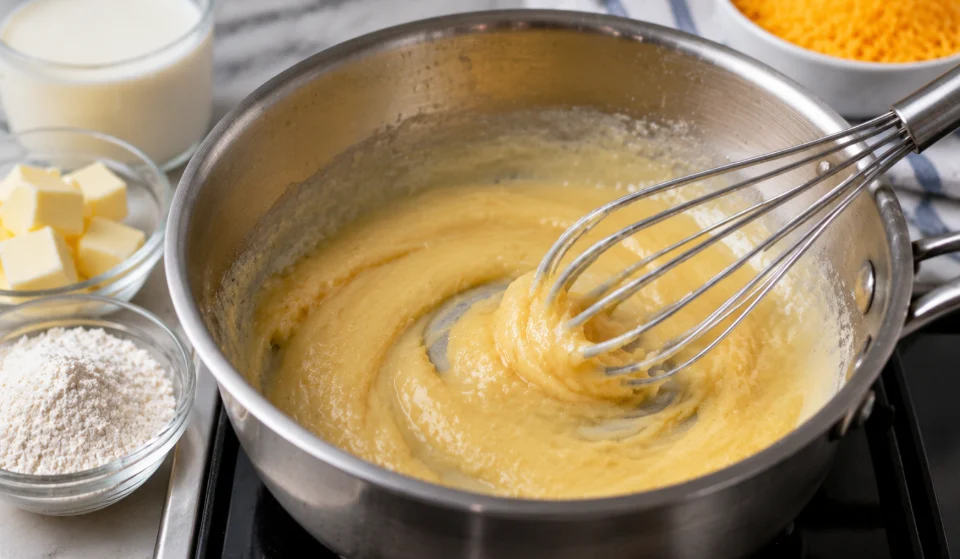

how to make a roux for mac and cheese starts by cooking butter and flour into a smooth paste before adding milk. That paste thickens the milk before you add cheese, creating the base for creamy macaroni. You can use the sauce for a quick stovetop meal or a baked weeknight dinner.

This friendly, practical guide helps home cooks make a stovetop roux and turn it into cheese sauce. You’ll get clear steps for both stovetop and baked mac and cheese, plus simple ways to handle common sauce problems. The process is easy cooking but steady heat and a whisk make a real difference. A gentle hand with the heat helps keep the sauce smooth.
Key Takeaways
- Cook butter and flour together to make a smooth paste.
- Add milk gradually and whisk until the sauce thickens.
- Stir cheese into the sauce over low heat.
- Use the sauce for stovetop or baked macaroni and cheese.
- Prepare your ingredients before heating the butter.
What a Roux Does in Mac and Cheese
A roux gives milk the structure to cling to macaroni instead of running off the noodles. Cooked flour absorbs liquid and thickens it, giving cheese sauce enough body to coat pasta. The result feels creamy on the tongue and stays with each bite rather than pooling at the bottom of the bowl.
Milk added to roux makes béchamel, and cheese stirred into béchamel makes Mornay sauce. Those names describe two stages of one sauce. Béchamel is the milk-thickened roux sauce; Mornay sauce is the cheese-finished version you use for macaroni and cheese.
A roux gives the milk and cheese sauce body, so it can coat pasta instead of slipping away.
The flour needs to cook with fat before the liquid goes in. That step disperses the flour through the butter and helps it thicken the milk evenly. Once the sauce is ready, its texture should be thick enough to cling to a spoon while still flowing easily.
For a classic starting point, the Culinary Institute of America’s béchamel sauce uses the same milk-and-roux foundation. A cheese sauce builds on that foundation with cheese, which brings the flavor and changes the sauce’s texture.
Keep the stages clear as you cook: the roux is the flour and fat, béchamel is the milk-based sauce and Mornay sauce includes cheese. Think of the roux as the sauce’s foundation and the cheese as its flavor.
How to Make a Roux for Mac and Cheese: The Basic Ratio
Equal weights of butter and flour make a reliable starting point for a smooth roux. Weight is the clearest way to measure because a cup of flour can vary depending on how you fill it. A kitchen scale keeps the butter and flour balanced without relying on a loose volume estimate.
Two ounces of butter equals four tablespoons and pairs with two ounces of all-purpose flour, or a scant half cup. The flour’s cup measure is approximate, so do not pack it into the measuring cup. This small batch gives you a practical starting amount for a home cheese sauce.
The equal-weight roux ratio makes it easy to scale a recipe up or down. Keep the weights matched when you change the batch size. For a larger pot of macaroni, measure more of both ingredients rather than adding extra flour alone.
If you do not have a scale, spoon flour into a dry measuring cup and level the top. Avoid scooping directly from the flour bag because that can compress the flour and add more than you intend. The scant half-cup amount is a useful guide, not an exact weight every time.
Butter contributes flavor and fat, while flour supplies the starch that thickens the milk. The mac and cheese recipe works best when those two ingredients begin in balance. Measuring them carefully makes the next steps easier and gives you a consistent sauce.
Use a kitchen scale when you want the closest match by weight.
White, Blonde and Brown Roux
A white roux is the best match when the sauce needs strong thickening and a mild flavor. Pale cooking keeps its flavor subtle, so cheese remains the main taste. Roux color changes as the flour cooks, and each stage brings a different balance of flavor and thickening power.
White roux has the strongest thickening power of the three stages. It suits béchamel and cheese sauce because it supports a creamy texture without adding much toasted flavor. A blonde roux offers a middle ground, while a brown roux brings deeper flavor and less thickening.
| Stage | Cooking time | Appearance | Best use |
|---|---|---|---|
| White | About 1 minute total after flour is added | Pale and smooth | Béchamel and cheese sauce |
| Blonde | 3 to 4 minutes over medium-low heat | Pale golden | Light sauces and soups |
| Brown | 10 to 12 minutes | Deep golden brown | Gumbo and darker gravies |
A blonde roux takes longer to cook than a white one and develops a lightly toasted flavor. A brown roux cooks for 10 to 12 minutes and adds a stronger toasted note. The tradeoff is that darker roux thickens less than a pale roux.
Choose the stage to match the dish, not simply the color you like. A darker roux can add depth to gravy or gumbo but that flavor can compete with delicate cheese. Keep the roux pale when the cheese flavor should stay in front.
Ingredients and Exact Quantities
The recipe uses five measured ingredients for its pasta and cheese sauce. Start with the listed amounts for a straightforward stovetop macaroni and cheese, then use the same ingredients if you plan to bake it. Prepare the cheese and milk before you turn on the stove.
Two cups of uncooked elbow macaroni make the pasta base, while butter and flour build the sauce. The recipe also uses milk and cubed cheese. Those measured ingredients are enough to make the sauce and bring the dish together without adding unmeasured extras.
| Ingredient | Exact amount | Preparation |
|---|---|---|
| Uncooked elbow macaroni | 2 cups | Measure dry |
| Unsalted butter | 3 tablespoons | Cut into pieces |
| All-purpose flour | 2 tablespoons | Measure level |
| Milk | 2 cups | Bring to room temperature or warm gently |
| Cubed cheese | 8 ounces | Cut into small cubes |
For the clearest measurement, use the amounts shown rather than estimating from a handful or a splash. The ingredient quantities are sized to make a home-cooked batch. You can use the same measured ingredients for the stovetop version or transfer the finished mixture to a baking dish.
The measured macaroni and cheese ingredients include uncooked pasta and cubed cheese. The cheese can be grated before cooking if you prefer, which helps it melt more evenly. Keep the milk and cheese close to the stove once preparation is complete.
Measure each ingredient before turning on the stove.
Prepare the Ingredients and Pan
Set out the pan, whisk and measured ingredients before the butter melts. Preparation gives you time to add each ingredient without rushing once the roux is hot. Set a saucepan on the stove, then place a whisk and measuring tools within reach.
Room-temperature or gently warmed milk is easier to whisk into the roux. Cold milk can still be used, but warmer liquid blends more readily. Warm it gently in a separate pan or microwave, and avoid letting it boil before it goes into the sauce.
Grate block cheese before you begin cooking. Freshly grated cheese melts more smoothly than pre-shredded cheese. Grating at the last moment is an easy mistake: the sauce may already be hot while you are still working on the cheese.
Keep the pasta colander and a space for drained pasta ready. If you are making the baked version, set out a baking dish before the sauce is done. These small preparations keep the pasta from sitting forgotten while you search for a pan or utensil.
Place the butter, flour and milk near the saucepan, with the cheese in a separate bowl. Keep the whisk close enough to grab without reaching across a hot burner. A clear counter also gives you room to drain pasta and fold it into the sauce.
Keep the prepared cheese close enough to add gradually.
How to Make a Roux for Mac and Cheese on the Stovetop
Melt the butter over medium-low heat before whisking in the flour. Gentle heat gives the butter time to melt without browning, which helps keep the roux mild. Use a saucepan with enough room for the later milk additions.
Cook a white roux only until it looks smooth and small bubbles form. If you want to know how to make a roux for mac and cheese from scratch, follow these short steps and watch the color closely.

- Melt the butter over medium-low heat. Swirl the pan so the butter melts evenly, then keep the burner at the same setting.
- Add the flour and stir constantly for 30 seconds to 1 minute. The flour should absorb the butter and form a smooth paste.
- Cook the white roux for another 30 seconds to 1 minute while stirring. Look for a slightly thickened paste with small bubbles.
These cooking intervals keep the flour pale while giving it time to cook. The roux should not smell raw or take on a brown color. Scorching or browning changes the mild flavor intended for a cheese sauce.
If the paste starts to darken, the pan is too hot for a white roux. Turn down the burner or lift the pan away from the heat briefly. A steady stir helps the butter and flour cook evenly across the bottom of the saucepan.
Take the pan off the heat if the flour begins to darken.
Turn the Roux into a Smooth Cheese Sauce
Whisk in the milk a little at a time so the roux blends into a smooth sauce. Gradual additions give the flour time to mix with the liquid instead of forming clumps. Let each small addition blend before adding more milk.
Bring the milk and roux mixture to a boil, then cook it for 1 to 2 minutes until thickened. A quick and easy way to make mac and cheese sauce is to whisk milk into the roux, thicken it, then stir in cheese.
Once the sauce thickens, lower the heat before adding cheese. To learn how to make a roux for mac and cheese, focus on steady whisking and a controlled simmer. The sauce should look smooth before you add the cheese.
Stir in the cheese gradually over low heat. Let each handful melt into the sauce before adding the next. The full process takes about 5 minutes, and the sauce should become smooth as the cheese melts.
To make a very quick cheese sauce, whisk milk into the roux gradually, let it thicken, then add cheese over low heat. Keep stirring gently rather than turning up the burner to hurry the melt. High heat can make cheese separate instead of blending.
Stop cooking once the sauce coats the pasta without running like milk.
Choose Cheese for Flavor and Melt
A sharp cheddar brings clear flavor while a milder melting cheese can soften its edge. Balance matters more than using a long list of cheeses. A familiar cheddar gives macaroni and cheese a tangy taste, while a smooth-melting option can help the blend feel creamy.
Pair a pronounced cheese with a milder cheese when you want both flavor and a smooth melt. Monterey Jack melts smoothly and adds stretch. Gruyere and smoked Gouda bring distinct flavors that can add character to a cheese blend.
| Cheese | Flavor | Role in the blend |
|---|---|---|
| Sharp cheddar | Pronounced and tangy | Familiar main flavor |
| Monterey Jack | Mild and creamy | Smooth melt and stretch |
| Gruyere | Nutty and savory | Depth alongside cheddar |
| Smoked Gouda | Smoky and rich | Strong accent in a blend |
Sharp cheddar is a reliable choice when you want a classic mac and cheese flavor. A mild cheese can balance its tang, while Gruyere, smoked Gouda, Fontina or Colby offer other options for a melting cheese blend.
Cheese changes as it heats, and its composition affects how it melts and flows. A review of natural cheese melting describes how cheese structure responds to heat. For home cooking, block cheese is a practical choice because you can grate it fresh.
Grate the cheese from a block for a more even melt.
Fix Lumps and Thin or Grainy Sauce
Most sauce problems have a simple texture fix. Start by checking whether the sauce is lumpy, too thin or grainy, then adjust the heat or texture. A quick correction can often save a pot without changing the dish.
Vigorous whisking or straining can help remove lumps, while lower heat helps prevent graininess. If you are looking for how to fix lumpy roux, whisk the sauce firmly first. Strain it if the lumps do not break apart.
| Problem | Likely cause | Fix |
|---|---|---|
| Lumpy sauce | Flour did not blend evenly | Whisk vigorously or strain |
| Sauce that is too thin | Not enough cooking time | Cook longer until it thickens |
| Grainy or oily sauce | Cheese overheated | Lower the heat as cheese melts |
A sauce that is too thin can cook longer to reduce and thicken. Stir it while it cooks so the bottom does not catch. Check the texture as it changes, and stop when the sauce clings to a spoon.
Overheated cheese can turn grainy or oily. Lower heat helps prevent this when you add cheese and gentle stirring keeps the sauce moving. Avoid trying to fix a separated sauce by raising the burner; more heat can make the texture worse.
Add a splash of milk if the finished sauce becomes too thick.
How to Make a Roux for Mac and Cheese with Milk
Milk loosens the cooked roux and becomes the base for the cheese sauce. Whole milk is a straightforward liquid for a creamy sauce, with enough body for an everyday macaroni and cheese. Add it gradually so it blends into the roux smoothly.
Heavy cream can make the sauce richer and may replace some of the milk. You can make a roux for mac and cheese with heavy cream, but the cream gives the sauce a richer feel. The amount of richness depends on how much cream you use in place of milk.
Whole milk keeps the sauce familiar and creamy. Heavy cream is an option when you want more richness, but it does not need to replace all the milk. Keeping some milk in the mixture gives you a less rich result than using cream alone.
Evaporated milk is another option for macaroni and cheese sauces. Each liquid can work with a roux, and you can choose based on the result you prefer. The roux thickens the dairy and helps it form a base for cheese.
Warm or room-temperature liquid is easier to incorporate gradually. Set the liquid beside the pan before you begin, and pour it in at a pace that lets you keep whisking. That makes the sauce easier to control as it comes together.
Make the Stovetop Mac and Cheese
Start the pasta in salted water while you prepare the sauce. Elbow macaroni is a familiar shape, but shells or cavatappi also hold sauce well. Keep an eye on the pasta so it stays firm enough to fold into the hot cheese sauce.
For al dente pasta, cook macaroni about 1 minute less than the package time. This mac and cheese roux recipe makes homemade mac and cheese with a smooth sauce and a short, practical method.
- Boil the macaroni in salted water, cooking it about 1 minute less than the package time. Taste a piece to check that it is tender but still firm.
- Drain the pasta well and set it aside. Keep the saucepan available for the sauce, or use another pan if your sauce is already ready.
- Finish the cheese sauce with the measured ingredients from the recipe. Stir until the cheese has melted and the sauce looks smooth.
- Fold the drained pasta into the sauce. Stir gently until the noodles are coated, then serve while the sauce is hot.
This is a very simple homemade mac and cheese method: cook pasta, make the cheese sauce and combine them. The sauce should cling to the macaroni instead of collecting at the bottom of the pot. If you use shells or cavatappi, fold them in carefully so they stay intact.
For a stovetop mac and cheese recipe, keep the pasta and sauce warm while you bring them together. If the macaroni finishes first, drain it and set it aside rather than letting it sit in cooking water. That keeps the texture from becoming too soft.
Serve the stovetop version while the sauce is hot and silky.
Bake the Mac and Cheese Until Bubbly
Heat the oven to 350°F before assembling the baking dish. Baking gives macaroni and cheese a hot, bubbly finish while the sauce settles around the pasta. Use the same recipe quantities as the stovetop method.
Bake the assembled macaroni and cheese at 350°F for 30 minutes or until hot and bubbly. The pasta continues to soften in the oven, so undercook it as directed in the stovetop method before baking.

- Preheat the oven to 350°F. Cook and drain the pasta, then mix it with the prepared cheese sauce.
- Transfer the pasta and sauce to a baking dish. Spread the mixture evenly so the center and edges heat at a similar pace.
- Bake for 30 minutes or until the dish is hot and bubbly. Check the center before serving, since the outside can heat faster.
A baking dish turns the same creamy mac and cheese into a warm casserole-style meal. The pasta should be slightly firm before it goes into the oven because it continues cooking as the sauce heats. This helps keep the finished noodles from becoming overly soft.
Use a dish that holds the pasta and sauce without filling it to the rim. Leave a little room at the top so bubbling sauce stays contained. Let the dish rest briefly on a heat-safe surface after baking.
Let the top become hot and bubbly before serving.
Making Mac and Cheese Without Roux
Mac and cheese without roux is possible when cheese is melted gently into warm dairy. Roux-free sauce can be quicker to make, but it has less roux-based thickening. The result may not match the thicker, more stable texture of a roux-based cheese sauce.
Low, gentle heat and gradual cheese additions support a smoother roux-free sauce. This method relies on the dairy and melted cheese rather than flour cooked with fat. Keep the heat controlled so the cheese has time to melt without overheating.
- Base: Warm dairy gently in a saucepan. Add cheese to the warm liquid rather than starting with a flour-thickened base.
- Texture: Add cheese a little at a time and stir as it melts. The sauce has less roux-based thickening and may be less stable.
- Use: Fold the sauce into cooked pasta when the cheese has melted. Keep the burner low so the sauce does not overheat.
When making mac and cheese without roux, the cheese can melt into warm dairy without a thickening paste. That can be useful when you want to skip a step, but the sauce may be thinner or less able to cling to every noodle.
A low burner gives you more control than a high one. Add the cheese gradually and stir between additions, rather than dropping it all into the pan at once. This is a simple alternative, not a promise of the same texture as a roux-based sauce.
Choose the roux-free approach when speed matters more than a thick, stable sauce.
Serving Suggestions for a Creamy Dish
Serve macaroni and cheese beside a crisp salad when you want to balance its richness. Fresh greens bring a lighter contrast to a creamy dish, whether you make it on the stovetop or bake it. You can also serve the macaroni as a side with a hearty main.
Barbecue ribs, fried chicken, catfish and ham all pair well with macaroni and cheese. For an easy mac and cheese recipe dinner, choose one main dish and add greens or a crisp salad to round out the plate.
- Barbecue ribs: Pair the creamy pasta with smoky ribs for a hearty meal.
- Fried chicken: Serve a scoop beside crisp chicken for a familiar comfort-food plate.
- Catfish: Add macaroni and cheese alongside catfish for a filling dinner.
- Ham: Serve the pasta with ham for a simple main-and-side combination.
- Greens or salad: Add cooked greens or a crisp green salad for a lighter contrast.
For a full plate, serve the macaroni in a modest portion beside your chosen main. Its creamy sauce makes it filling, so a crisp side can keep the meal from feeling too heavy. Choose cooked greens for a warm side or salad for a cool one.
If you want more ideas for a complete mac and cheese meal, match the main dish to the way you plan to serve it. For more meal ideas, visit recipely.org. A baked casserole works well for a shared table, while a stovetop version suits quick individual portions. Add a green vegetable to make a rich plate feel more balanced.
Store and Reheat Leftovers Safely
Refrigerate or freeze perishable leftovers within two hours. Prompt storage matters for macaroni and cheese because both pasta and sauce are perishable. Pack leftovers into shallow containers so they cool more quickly before refrigeration.
USDA guidance says leftovers and casseroles should reach an internal temperature of 165°F. Perishable food should not sit at room temperature for more than two hours. Keep hot food at 140°F or above when holding it for serving.
Refrigerate or freeze perishable leftovers within two hours, and keep hot food at 140°F or above while serving.
Refrigerated leftovers keep for 3 to 4 days. Use a food thermometer to check the center of a reheated portion, especially when warming a large casserole. The USDA food safety guidance explains these storage and temperature limits for leftovers.
Divide a large amount into smaller portions before chilling so it cools more evenly. Reheat only the portion you plan to eat and stir stovetop leftovers as they warm. If the sauce tightens in the refrigerator, a small splash of milk can loosen it as it heats.
Reheat leftovers until their center reaches 165°F.
Conclusion
A smooth cheese sauce begins with a pale roux and patient whisking. Gradual additions help the milk blend into the roux, while gentle heat helps the cheese melt into a creamy sauce. Those small steps work for stovetop macaroni and baked mac and cheese.
Choose the stovetop method for a quick meal or bake the assembled dish when you want a bubbly finish. Set out your ingredients before you start, and keep the whisk moving as the sauce comes together.
Try how to make a roux for mac and cheese with the measured ingredients and serve it warm.
FAQ
Can you make roux with ghee?
Yes, ghee can replace butter as the fat in a roux. Use an equal weight of flour and cook the mixture gently until it forms a smooth paste. Ghee has a different flavor from butter, so it may change the taste slightly. Keep the heat controlled to avoid browning the roux when you want a mild sauce.
Does mac and cheese need a roux?
No, mac and cheese does not need a roux, but a roux thickens milk and helps make a smooth, stable cheese sauce. Without one, cheese can still melt into warm dairy, though the texture may be thinner. Choose the roux method when you want a sauce that clings well to pasta and holds together.
Can I use a roux to thicken gravy?
Yes, a roux can thicken gravy. Whisk broth or another suitable liquid into the cooked flour-and-fat mixture, then let it thicken. A darker roux adds more toasted flavor and has less thickening power than a pale roux. Choose the color based on the flavor and body you want in the gravy.
How do you make macaroni cheese sauce?
Cook butter and flour together, whisk in milk gradually, thicken the sauce, then add cheese over low heat. Stir as the cheese melts so the sauce becomes smooth rather than oily. Once the sauce coats a spoon, fold in cooked macaroni. Keep the heat gentle after adding cheese to protect its texture.
How to make cheese sauce with 3 ingredients?
Butter, flour and milk make a béchamel, and cheese turns it into cheese sauce. Cook the butter and flour together, then whisk in milk until the mixture thickens. Stir cheese into the warm sauce over low heat. The cheese is an additional ingredient, so the finished cheese sauce uses four ingredients in total.


