

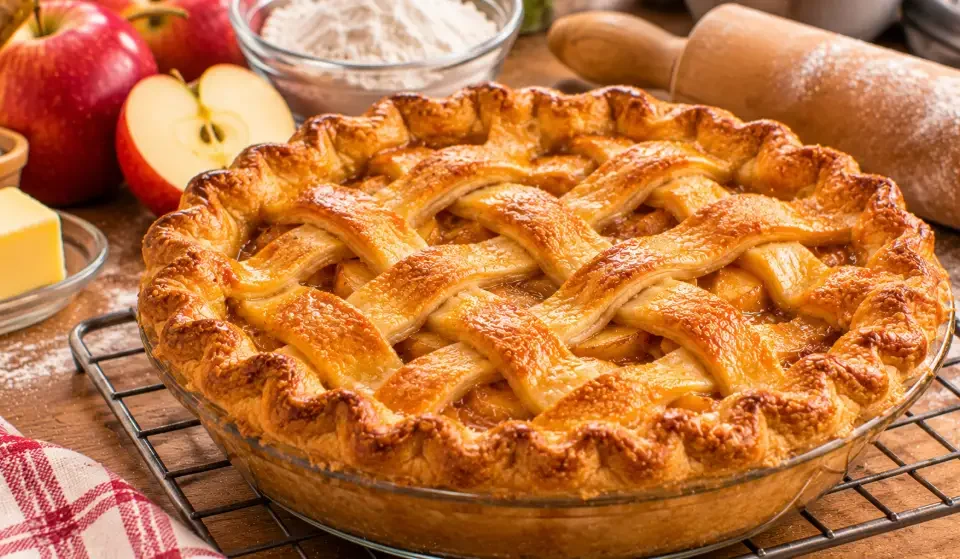

How to Bake a Pie successfully, start with cold dough, a well-prepared filling, and enough oven time for the juices to bubble. Bake a homemade fruit pie until its crust turns golden brown and the filling bubbles through the top. Those cues matter more than the clock alone.
For home cooks, pie can feel like a lot of small decisions. A few clear steps make the process manageable, whether you are baking apple, berry, custard, or another favorite.

Key Takeaways
- Keep the dough cold for a flaky crust.
- Balance fruit, sweetness, acidity, and thickener.
- Use visual cues alongside the baking time.
- Let fruit pie cool before slicing.
- Store each pie type at a safe temperature.
A homemade pie is within reach when you follow the dough, filling, and doneness cues.
How to Bake a Pie Crust From Scratch
For a flaky crust, keep the butter cold and stop mixing as soon as the dough holds together. Cold butter releases steam as it melts, helping separate the crust into flaky layers. A basic pie crust recipe easy enough for beginners uses flour, salt, granulated sugar, cold unsalted butter, and ice water.
One recipe makes two 9-inch crusts and chills the dough for 2 hours before use. If you want to learn how to bake a pie crust from scratch, gentle handling is just as important as the ingredients. The dough should look shaggy, not smooth.
A few visible butter pieces are a good sign, not a mixing problem.
Follow these steps to make a double crust. Add ice water gradually, since the dough needs only enough moisture to come together. If you want another pie-making resource, recipely.org can offer more ideas for your next bake.
- Mix the dry ingredients with cold butter until the butter pieces are pea-sized.
- Add ice water a little at a time, stopping when the dough holds together.
- Chill the dough for 2 hours, then roll it on a lightly floured surface.
- Fit the dough into the pan, add filling, then seal and crimp the top crust.
Roll from the center outward and turn the dough often for an even circle. Press the bottom crust gently into the pan without stretching it. For a double crust, trim the overhang, pinch the top and bottom edges together, then crimp with your fingers or a fork.
Chill an assembled double-crust pie for 20-30 minutes so the crimp is more likely to hold its shape.
Prepare a Fruit Pie Filling
A balanced fruit filling pairs ripe fruit with sweetness, a little acidity, and enough thickener to hold the juices. Good balance keeps the fruit’s flavor clear without making the filling runny or overly sweet. This framework works for apples, pears, berries, peaches, or rhubarb.
For an easy apple pie recipe, combine prepared apples with sugar or another sweetener, spices, an acidic ingredient, and a thickener. The fruit supplies flavor and moisture. Sweetener brings out its natural taste, while acidity brightens it. Spices add warmth, and thickener helps the juices set.
To make apple pie, peel and slice the apples evenly, then mix them with the seasonings and thickener. Pre-cooking apple pie filling on the stove for about 5 minutes can soften the apples and bring the spices and juices together. This brief step also helps the apples retain their texture.
Keep the fruit pieces similar in size so they soften at a similar pace. Taste the fruit before baking, then adjust sweetness or acidity to suit its ripeness. Tart apples may need more sweetener, while very sweet fruit can benefit from a sharper note.
Use a thickener that suits the fruit and follow its recipe guidance. Juicy berries and sliced apples do not release moisture in the same way, so the amount and type of thickener should match the fruit. A well-seasoned filling should taste slightly bold before baking, since the crust softens its flavor.
Let the fruit and seasoning guide the filling rather than adding ingredients by guesswork.
How to Blind Bake a Pie Crust
A prebaked shell helps when a filling needs less oven time than the crust. Blind baking means baking an unfilled crust with pie weights to set its shape. A par-baked crust is a crust baked partway before filling, while a fully blind-baked crust is baked until evenly golden and dry.
Heat the oven to 425°F, line the unfilled crust, and add pie weights. Bake for 15-18 minutes, until the edges are slightly golden. Carefully remove the weights, then continue baking at 375°F, using the table to choose the finish that suits your pie.

Check the surface, not only the timer: a par-baked crust has lightly golden edges, while a fully blind-baked crust is evenly golden with a dry surface. Choose the shorter finish when the filled pie will return to the oven.
| Crust state | Baking after weights are removed | Visual cue |
| Unbaked | Not applicable | Unbaked |
| Par-baked | 2-3 minutes at 375°F | Lightly golden edges |
| Fully blind-baked | 5-10 minutes at 375°F | Evenly golden and dry surface |
Use oven mitts when lifting out the hot weights. Let the shell settle before adding filling, especially if the recipe calls for a warm filling. The crust should stay in the pan as you move it, so support the base with both hands.
Use the dry, evenly golden surface as the cue that a fully blind-baked crust is ready.
How to Bake a Pie Without a Soggy Bottom
A wet filling and a pale bottom crust call for changes to heat, pan, and the thin layer beneath the fruit. Strong bottom heat helps a fruit pie bake through instead of staying soft. A metal pan conducts heat well, and setting it on a stone or steel can help the bottom crust brown.
Use these four actions to help prevent a soggy pie crust:

- Place the pie toward the bottom of the oven.
- Choose a metal pan for the fruit pie.
- Set the pan on a baking stone or steel.
- Use about 2 teaspoons of crust dust for a 9-inch fruit pie.
For crust dust, mix equal parts flour and granulated sugar by volume, then sprinkle about 2 teaspoons over the bottom crust before adding filling. Use a light, even layer so it can help block seepage without forming a thick coating.
All-purpose flour, bread flour, and cornstarch can each help prevent liquid from seeping into the crust. Cornstarch may leave a thin, jelly-like sheen beneath the fruit. That slight sheen is different from a pasty layer caused by piling on extra dust.
Crust dust is a small assist, not a fix for every filling. Pair it with a metal pan and the oven’s lower area to help the bottom crust receive heat. A stone or steel can add another hot surface beneath the pan, supporting more even browning.
Measure the crust dust lightly, since adding more will not make the bottom crust noticeably drier.
How Long to Bake a Pie
Many standard fruit pies take about 50-75 minutes, but bubbling juices are a better final check than the clock alone. About 1 hour is a useful starting point for an apple pie, with the oven temperature beginning high and reducing after 25 minutes. Pie size, filling, pan, and oven all affect the time.
When deciding how long to bake a pie, use the recipe’s estimate as a guide and watch the filling. A deep pie or a dense filling may need more time than a shallow one. A metal pan and an oven that runs hot can change how quickly the crust browns.
A fruit pie is not fully baked until its juices bubble through the top-crust vents. The bubbles show that the center has reached a full simmer, not just that the crust has browned. Let the filling bubble for at least 5 minutes before removing the pie.
To judge how long to bake a pie, look through the vents and check for steady bubbling in the filling. If the top crust browns before the juices bubble, loosely cover the edges with foil so they do not darken too much.
Oven temperature affects both browning and the time the fruit needs to soften. Use the recipe’s temperature guidance, then give the filling the full bubbling time. A browned top alone can hide a filling that has not cooked through.
Look for filling bubbling through the vents, not just a browned top crust.
How to Bake a Pie: Cool, Serve, and Store It
Give a freshly baked pie time to cool so its filling can set before you slice it. A full cool-down, at least a couple of hours, helps fruit pie hold clean slices. The filling continues to settle as it cools, so cutting too early can leave the pieces loose.
Storage depends on the pie type. Sugar-containing fruit pies can stay covered at room temperature for up to 2 days, then loosely wrapped in the refrigerator for 2 more days. Custard, cream, mousse, chiffon, fresh-fruit, pumpkin, and pecan pies need refrigeration and can keep for up to 4 days.
A clean slice is worth waiting for.
Perishable foods should not sit at room temperature longer than 2 hours, or 1 hour above 90°F. For safe handling details, check the USDA Food Safety and Inspection Service guidance. Use the table to choose a storage plan for each pie.
| Pie type | Storage | Time limit |
| Sugar-containing fruit pie | Covered at room temperature, then loosely wrapped in the refrigerator | Up to 2 days at room temperature plus 2 more days refrigerated |
| Custard, cream, mousse, chiffon, or fresh-fruit pie | Refrigerated until serving | Up to 4 days refrigerated |
| Pumpkin or pecan pie | Refrigerated after baking and cooling | Up to 4 days refrigerated |
When storing a sugar-containing fruit pie, cover it while it sits at room temperature. After that first storage period, wrap it loosely before refrigerating. Keep chilled pies in the refrigerator between servings, rather than leaving them on the counter.
Refrigerate perishable pie within 2 hours, or within 1 hour when the temperature is above 90°F.
Conclusion
A dependable result begins with one simple habit: keep the dough cold and wait for the filling to bubble. Those two checks give your homemade pie a better shot at a flaky crust and a cooked-through center.
Pick a fruit you enjoy and set out the crust ingredients before you begin. Keep the recipe nearby, and let the crust color and filling guide you near the end.
For your next bake, choose a fruit filling and trust the crust-color and bubbling cues; how to bake a pie gets easier with practice.
FAQ
Can you bake a pie with frozen fruit?
Yes, you can bake a pie with frozen fruit, but the fruit may release more liquid as it cooks. Follow the filling recipe’s guidance for thickener instead of adding extra by guesswork. Keep an eye on the vents, too. The pie is ready when its juices bubble through the top crust and continue bubbling for at least 5 minutes.
Should pie dough be cold before it goes in the oven?
Yes, pie dough should be cold before it goes in the oven. Cold butter releases steam as it melts, helping create flaky layers in the crust. Chilling also firms the dough, which can help it hold its shape as it bakes. If the assembled pie has been sitting out, a brief chill can firm the fat again.
Why does my pie crust shrink while baking?
Overworking or insufficiently chilled dough can contribute to a pie crust shrinking in the oven. Handle the dough gently and give it time to chill before baking. A basic all-butter dough needs 2 hours of chilling before use. When fitting dough into the pan, avoid stretching it, since stretched dough can pull back as it bakes.
How can I keep the edges from getting too dark?
Cover the pie edges loosely with foil once they turn golden, while the filling continues to bake. Shape the foil around the rim so it shields the crust without pressing on the top. Check the filling through the vents and allow the juices to bubble before you remove the pie. This protects the edges without cutting the bake short.
Can I leave a perishable pie out overnight?
No, do not leave a perishable pie out overnight. Perishable food should stay at room temperature for no more than 2 hours, or 1 hour when the temperature is above 90°F. Put the pie in the refrigerator within that limit. Custard, cream, mousse, chiffon, fresh-fruit, pumpkin, and pecan pies all need refrigeration.

