

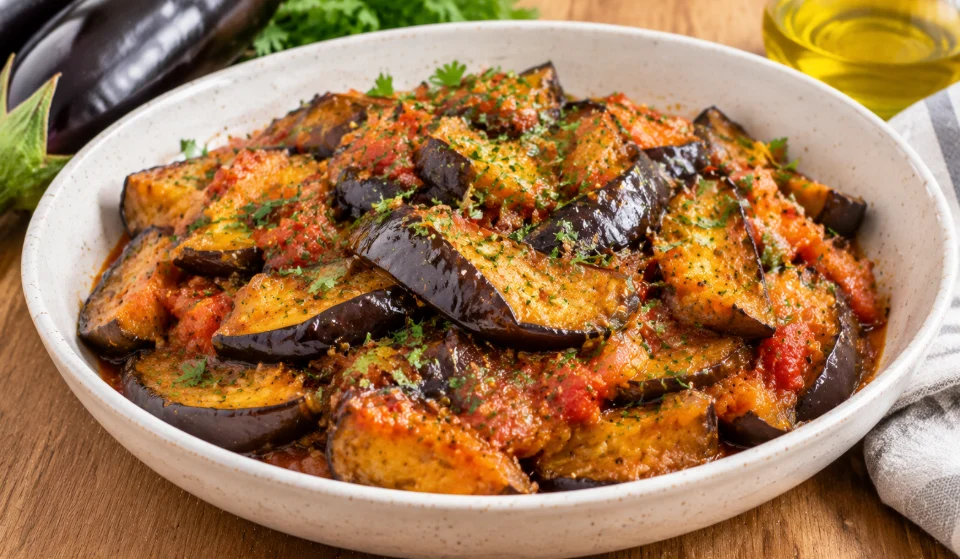

Melongene turns tender when you match its cut to the cooking method, whether you roast, grill, pan-cook, or air-fry it. Even pieces brown more evenly, while a whole one cooks down into soft flesh for mashing or spreading.
Your best method depends on the texture you want and the time you have. Roasting is hands-off, an air fryer handles slices quickly, and stovetop cooking gives you close control over browning. Caribbean-style preparations bring garlic, curry, or fire-roasted flavor to the table. You can season simply with salt, pepper, and oil, then adjust to suit the dish.
A uniformly cut eggplant is easier to cook evenly.

Key Takeaways
- Match the cut to the cooking method for even results.
- Use a knife to check that the center is soft.
- Salting is optional for most cooking methods.
- Dry the surface and leave space between pieces when frying.
- Use whole-roasted flesh for mashes, dips, or spreads.
How to Cook Melongene With the Right Method
Choose the oven for hands-off cubes or a soft whole eggplant, the air fryer for quick slices, and the stovetop when you want to control browning. Pan-steaming means searing eggplant in a pan, adding a little water, and covering it so trapped steam finishes cooking.
Cook until a knife slips into the flesh easily, then stop before the pieces lose their shape. For a quick comparison, use the cut and heat shown here as starting points.
| Method | Cut | Heat | Time |
|---|---|---|---|
| Oven | 1-inch cubes | 400°F | 20-25 minutes |
| Air fryer | ½-inch slices | 375°F | 9 minutes |
| Stovetop | 2 cm thick rounds | Medium-high | About 5-6 minutes |
| Grill | ½-inch coins | Medium heat | 5-6 minutes per side |
Whole eggplants need vent holes before roasting so steam can escape.
Roast whole eggplant or cut pieces
For whole eggplant in the oven, poke each globe eggplant 3-4 times. Roast at 425°F for 40 minutes, then broil on high for 5-8 minutes. For a sliceable result, reduce the total bake and broil time by about 10 minutes. A whole-roasting time and broil finish gives you soft flesh without needing to peel it first.
Roast 1-inch cubes at 400°F for 20-25 minutes, tossing halfway through. The oven suits a larger batch, and the browned edges hold their shape in pasta or grain bowls. For grilled eggplant, set ½-inch coins over medium heat for 5-6 minutes per side.
Air-fry slices and cubes
To cook eggplant in an air fryer, preheat it to 375°F and arrange ½-inch eggplant slices in a single layer. Cook for 9 minutes, flipping halfway through. Crowded slices soften more than they brown, so work in batches if needed.
Air-frying is useful when you want browned edges without heating the oven. Brush the pieces with oil and season them before cooking. The minutes in the table are a practical starting point; check for tenderness before serving.
Sear and pan-steam on the stove
To cook eggplant on the stove, sear thick rounds about 2 cm (0.8 inch) wide for 1½-2 minutes per side. Add ¼ cup water, cover the pan, and cook about 2 minutes, or until soft. This answers how long to cook eggplant on the stove when you are using thick rounds.
Thin slices about 5 mm (0.2 inch) need a couple of minutes per side, with no water or covered steaming step. If you are deciding how to cook eggplant on the stove for a quick side, thin slices are a direct route to browned edges. For how to roast a whole eggplant in the oven, use the vented, whole-roasting method above. Check the center with a knife before serving.
Prepare Eggplant for Frying and Other Cooking
For frying, cut the eggplant evenly and dry its surface well, then decide whether a salt rest or soak suits the dish. Most pieces need no special treatment, and smaller eggplants tend to be less bitter than large, mature ones.
Preparing eggplant for frying means cutting evenly, drying well, and frying in a single layer. The skin is edible, so you can leave it on unless your recipe calls for peeled eggplant.

Decide whether salting is useful
Salting is not required for most cooking, and eggplant is rarely bitter enough to need it. A light pre-cook salt can draw out some excess moisture: sprinkle slices with ½ teaspoon salt, let them sit for 15 minutes, then pat them dry with paper towels.
For deep-fried slices, soaking in water with a couple of tablespoons of salt for about 30-45 minutes can help the result turn out less greasy. Drain and dry the slices carefully afterward. This salt-water soak for deep-fried slices is an option for that specific texture, not a rule for every dish.
Grilled slices can be salted for 45 minutes to release excess moisture, while salted roasted cubes can rest for 30 minutes. A glossy, smooth skin and a firm feel with slight give are signs of a good eggplant. Choose one with no soft spots or wrinkled patches.
Cut, dry, and set up the pan
Use a sharp knife and make pieces as similar in thickness as you can. Dry cut surfaces with paper towels before adding oil; wet pieces can splatter and steam instead of taking on a golden crust. For frying, heat about ¼ inch of oil in a wide pan.
Follow these four prep steps to keep the batch manageable:
- Cut the eggplant into even slices or pieces.
- Salt or soak only when the dish benefits from it.
- Pat each piece dry with paper towels.
- Fry in batches without crowding the pan.
For frying, cook slices for 2-3 minutes per side until deeply golden. Let the oil return to temperature between batches if it cools, and move cooked pieces to a paper towel-lined plate. A broad pan makes it easier to work in a single layer.
If you are drying other vegetables for a skillet, the same idea applies: a hot pan and room around each piece help it brown. These skillet tips for snap peas explain how spacing helps prevent soggy results. Leave space between pieces in the pan so they fry instead of steaming.
Make Caribbean Melongene at Home
For a hearty Caribbean-style meal, simmer diced melongene with curry powder, garlic, and a little water until it softens enough to mash. The covered stages trap steam and help the cubes collapse without scorching.
A garlicky curry melongene mash serves 2-3 and works well over brown rice. Add salt and hot sauce to taste, using the garlic and curry powder to build the main flavor.
Cook a garlicky curry melongene mash
Heat 3 tablespoons of vegetable oil in a pan and stir in 2 teaspoons of curry powder. Add one 12-16-ounce globe eggplant, diced, along with 7 garlic cloves and ¼ cup of the ½ cup water. Season with salt and hot sauce to taste.
Cover and cook for 7-9 minutes, then add the remaining ¼ cup water. Cover again and cook for another 7 minutes. The cubes should be soft enough to mash against the side of the pan.
Remove the lid and simmer for 3 minutes, stirring as the liquid cooks down. Mash the softened melongene in the pan for a rustic texture, or leave a few cubes whole. Taste and adjust the salt or hot sauce before serving.
Serve melongene in choka or stew
For choka, fire-roast whole melongene until the skin is charred and the inside is soft. Peel away the skin, then mash the flesh with garlic and seasoning. The smoky flesh makes a simple side for rice, roti, or another meal.
You can also add sliced melongene to oxtail stew. Pressure-cook 1½ pounds of oxtail for 20-30 minutes, then add 2 medium eggplants and cook for about 10 minutes. The slices soften in the meat’s sauce and bring a creamy texture to the stew.
Choose mash when you want a soft, spoonable side, or let the eggplant cook in the stew for a fuller meal. The final uncovered simmer keeps the curry mash thick rather than watery. Serve the curry mash over rice or pair the softer eggplant with the stew’s sauce.
Turn Cooked Eggplant Into Dinner
Eggplant Parmesan, caponata, and baba ganoush are easy starting points, while a spiced roast or tomato-and-cheese half makes a more substantial dinner. For a weeknight meal, choose a dish that uses the cut and texture you already have.
Easy eggplant recipes include familiar baked dishes, dips, and pasta meals. Pick one of these six ideas based on whether you want slices, a mash, or a filling for the plate.

- Eggplant Parmesan
- Moussaka
- Caponata
- Baba ganoush
- Stuffed eggplant
- Eggplant pasta
Choose an easy eggplant dish
Eggplant Parmesan layers cooked slices with sauce and cheese, while pasta gives browned cubes a place alongside noodles. Moussaka and stuffed eggplant make more filling bakes. For a spread, baba ganoush turns soft eggplant flesh into a dip.
If you want more recipe ideas and practical leftovers advice, browse these melongene cooking and storage tips. A dish built around slices keeps their shape, while roasted flesh works best when you want a softer base.
Make Turkish-spice roasted eggplant
For Gordon Ramsay’s Turkish-spice recipe, use 2 medium Italian eggplants, 8-10 garlic cloves, 2 teaspoons fresh ginger, 4 teaspoons ground cumin, 3 teaspoons ground coriander, and 1 teaspoon ground cardamom. Score and salt the eggplant, then drain it cut-side down on a rack for at least 10 minutes.
Sear the eggplant cut-side down for 3-5 minutes, then roast at 350°F for 20-30 minutes. Cook the tomatoes with the eggplant mixture for 5-10 minutes so they soften and mingle with the spices. For the Turkish-spice roasting sequence, make it 3-4 days ahead without basil, then add basil when reheating.
The spice blend gives the roast a warm, savory flavor, while the tomato mixture adds moisture. Serve it with bread or rice, or pair it with a simple salad. Keep the basil out until reheating so it stays fresh-tasting.
Finish halved eggplant with tomato and cheese
For a simpler baked dinner, halve the eggplant and roast it at 400°F for about 30 minutes. Spoon tomato sauce over the cut sides, cover with cheese, and bake for 5-10 minutes more, until the topping melts.
Cooked eggplant keeps in the refrigerator for 4-5 days or in the freezer for up to 12 months. Store it in a sealed container once it has cooled, then reheat only the amount you plan to eat. Scoop the soft flesh from whole-roasted eggplant when you want a dip or spread rather than intact slices.
Conclusion
Tender results come from even cuts and stopping once the flesh is soft, not from salting every eggplant. A thick round needs a different approach from a small cube, and whole-roasting gives you flesh that is easy to mash.
Choose a small eggplant, cut it evenly, and try the stovetop method or oven cubes. Season with salt, pepper, and olive oil, then check the center as it cooks. Choose a cooking method for tonight, season the eggplant simply, and cook one batch until golden and tender.
FAQ
How do you remove the bitterness from eggplant?
Salting is optional for most eggplant, and choosing a smaller one gives you a less bitter starting point. If your recipe benefits from moisture removal, salt the slices and let them rest before drying. Deep-fried slices can instead soak in salted water for 30-45 minutes. Dry them well before frying so surface water does not cause splattering.
Why does my stomach hurt after eating eggplant?
Individual sensitivity or an allergic reaction can cause stomach pain after eating eggplant, but the food alone cannot identify the cause. Note what you ate and when symptoms began, especially if the pain recurs. Seek medical advice for severe or recurring pain. Trouble breathing, swelling, or other signs of a serious allergic reaction need urgent medical attention.
How to cook eggplant Gordon Ramsay?
For Gordon Ramsay’s Turkish-spice eggplant, score and salt halved eggplants, then drain them cut-side down on a rack for at least 10 minutes. Sear them cut-side down for 3-5 minutes and roast at 350°F for 20-30 minutes. The recipe uses garlic, ginger, cumin, coriander, and cardamom, with tomatoes cooked alongside the eggplant mixture.
What is the trick to cooking eggplant?
Cut eggplant pieces evenly, avoid crowding the pan, and cook until the flesh is soft. Similar-sized pieces finish at about the same time, while room around each one helps it brown. Salting is not required for most methods. Use it when a particular dish benefits from moisture removal, and pat the pieces dry before cooking.
What is the famous eggplant dish?
Eggplant Parmesan and baba ganoush are familiar classics, though no single dish is famous everywhere. Eggplant Parmesan layers slices with tomato sauce and cheese, while baba ganoush uses soft eggplant flesh as a dip. The best-known dish depends on the cuisine and what you enjoy eating. Moussaka, caponata, and stuffed eggplant are other well-known choices.
Is there a downside to eating eggplant?
Most people can eat eggplant as part of a varied diet, though individual allergies or digestive sensitivity are possible. If you notice symptoms after eating it, pay attention to whether they happen again and discuss severe or recurring problems with a medical professional. Eggplant can be cooked in several ways, so a change in preparation may also change how it feels to eat.
What organ is eggplant good for?
Eggplant is not a treatment for a specific organ. It is a vegetable that contributes fiber and other nutrients to meals, so it can fit into a varied eating pattern. No single food can promise a targeted health benefit on its own. Prepare it with the cooking method and seasonings you enjoy, and pair it with other foods for a balanced meal.


