

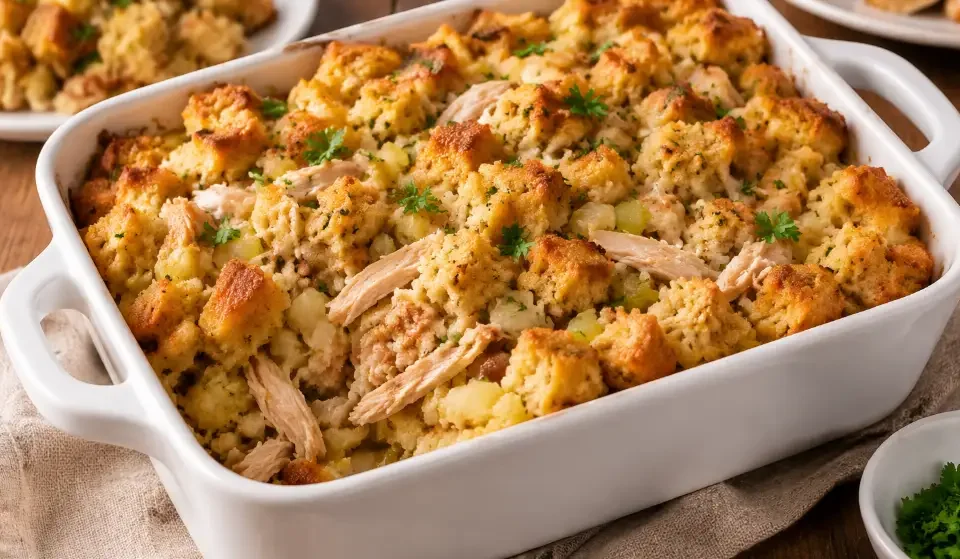

To make turkey dressing, mix dried bread cubes with sautéed vegetables, broth, herbs, and turkey, then bake the mixture in a casserole dish. The method makes a savory side with a soft center and browned top. You can use cooked turkey or turkey drippings for deeper flavor.
For Thanksgiving or a family dinner, a homemade casserole fits beside roast turkey and other familiar sides. It also lets you prepare the bread mixture ahead, then bake it close to mealtime. Choose the flavor additions your household enjoys, or keep the dish simple and let the herbs shine.

Key Takeaways
- Use dried bread cubes for a tender, not gummy, texture.
- Add stock gradually as the bread absorbs it.
- Cook the dressing in a buttered casserole dish.
- Use turkey meat or drippings for a deeper savory taste.
- Make the mixture ahead and refrigerate it before baking.
What Turkey Dressing Is and How It Differs from Stuffing
Turkey dressing is a seasoned bread mixture baked on its own and served alongside the turkey. It combines bread, vegetables, herbs, and seasonings in a casserole dish. Its location in the kitchen, rather than its ingredients, gives it the everyday name dressing.
Stuffing uses a similar mixture, but cooks inside a turkey or chicken. The cooking location is the useful distinction, even though some cooks use dressing and stuffing interchangeably. Both are commonly served as a holiday side, especially at Thanksgiving.
The cooking location is the useful distinction: dressing goes in a dish, while stuffing goes inside poultry.
Baking the mixture separately gives you control over the top and center. You can uncover the dish near the end of baking for a more browned top, while the bread underneath stays soft. That control helps when your family prefers a mix of textures.
A separate dish also makes serving straightforward. Set it beside the turkey and let everyone take a scoop with gravy or other sides. For this recipe, bake the mixture in a casserole dish and call it dressing.
Ingredients for Turkey Dressing
Gather the bread, vegetables, butter, herbs, stock, eggs, and basic seasonings before you start. Each group has a job: bread gives the dressing structure, stock adds moisture, and vegetables and herbs build savory flavor.
The recipe makes about 10-12 cups of dressing ingredients, enough for a generous family side. French, Italian, sourdough, and sandwich bread all work. Use the table as your shopping and measuring list.
Bread, broth, and binder
Start with 10-12 cups of dry bread cubes. They absorb stock and give the baked dish its familiar body. Two lightly beaten eggs help bind the bread and vegetables, so the finished scoops hold together instead of falling apart.
Turkey stock gives the mixture a direct poultry flavor, while chicken stock makes a handy alternative. Either stock provides savory moisture. Cornbread can make up a small part of a bread blend, but keep the listed recipe amounts as your base.
Vegetables, fat, and herbs

Onion and celery bring a sweet, fresh flavor and a little bite. Butter helps soften them and carries the flavor of garlic and herbs through the bread. Parsley adds a fresh note, while sage, thyme, and marjoram give the dish its savory, herbal character.
Salt and black pepper round out the seasoning. Stock can already contain salt, so check its flavor before you season the bread mixture. The ingredient groups and amounts are listed here for easy measuring.
| Ingredient group | Amount | What it does |
|---|---|---|
| Bread and binder | 10-12 cups dry bread cubes; 2 lightly beaten eggs | Bread gives structure; eggs help bind the mixture |
| Stock | 3 1/2-4 cups turkey stock or chicken stock | Adds savory moisture |
| Vegetables and garlic | 1 cup diced onion; 2 medium celery stalks; 2 teaspoons minced garlic | Adds aromatic, savory flavor |
| Butter | 6 tablespoons unsalted butter | Softens vegetables and carries flavor |
| Herbs and seasoning | 1/4 cup minced fresh parsley; 1 teaspoon ground sage; 1 teaspoon thyme; 1/2 teaspoon marjoram; 1 teaspoon salt; 1/2 teaspoon ground black pepper | Season the dressing with herbal and peppery notes |
Keep the salt and pepper close while mixing, but do not assume every stock needs the same amount of salt. Use unsalted butter and taste the broth before adding the listed salt.
Choose and Dry the Bread
Dry bread is the easiest way to help the dressing stay tender instead of gummy. Stale, dry cubes soak up broth more evenly than fresh bread, which can turn soft before the center bakes through. Cut your bread into cubes about 1 inch wide.
Dry the cubes uncovered overnight or in a 300°F oven for about 30 minutes. For the oven method, spread the bread cubes in a single layer on a baking sheet. Let them cool before you use them, so they do not trap steam in the bowl.
You can dry the bread up to 2 days ahead. Keep the cubes in a roomy container or leave them spread out in a dry spot. They should feel dry through the center, not just crisp on the outside.
The bread choice changes the way the mixture takes up liquid. French, Italian, sourdough, and sandwich bread are all suitable. If you mix in cornbread, remember that its crumb can absorb stock differently from larger bread cubes.
You can also assemble the dressing up to 24 hours before baking. Cover the dish and refrigerate it. Cold bread can absorb liquid as it rests, so check the mixture before it goes into the oven.
If the assembled mixture looks dry, add a splash of broth before baking. Keep the dish covered while it waits in the refrigerator, and do not leave it sitting out for an extended stretch. If you assemble the dish ahead, cover it and refrigerate it until baking time.
How to Make Turkey Dressing Step by Step
Start with a hot oven and tender vegetables so the bread can absorb the seasoned liquid evenly. Set out a large bowl and your buttered baking dish before mixing; the bread, stock, and vegetables come together quickly once ready.
Bake the dressing covered at 400°F for 25 minutes, then uncovered for 15-20 minutes. The covered stage warms the center, while the uncovered finish browns the top. Follow these five steps for an even bake.
- Preheat the oven to 400°F and butter a 9-by-13-inch baking dish. Set the dish near your mixing area so it is ready when the mixture comes together.
- Melt the butter in a skillet over medium heat. Add the onion and celery, then sauté for 8-10 minutes until tender. Stir in the garlic and herbs, and cook briefly until fragrant.
- Add the dried bread cubes, beaten eggs, salt, and pepper to a large bowl. Stir in the cooked vegetables. Pour in the stock gradually as you mix, so it spreads through the bread instead of collecting at the bottom.
- Spread the mixture evenly in the prepared dish. Cover it tightly with foil and bake for 25 minutes. Keep the foil in place during this stage so the middle heats through.
- Remove the foil and bake for 15-20 minutes, until the top is golden. Take care when lifting the foil, since hot steam can escape. Let the baked dressing rest for 5-10 minutes so it is easier to serve.
Give the bread and vegetables a thorough fold in the bowl. A few turns with a large spoon help distribute the herbs and stock without crushing the bread cubes. If the bowl is crowded, mix in two batches, then combine them gently.
Use a baking dish with enough room for the mixture to sit in an even layer. A deep mound can warm unevenly, while a very thin layer may brown faster. The 9-by-13-inch dish gives the base recipe room to bake as intended.
When you uncover the dish, check the top for color and the center for warmth. The surface should look golden rather than pale, and the middle should feel hot. Resting also gives the bread a moment to settle before you scoop it onto plates.
Put the serving spoon nearby while the dressing rests, and use a wide spoon to lift portions from the pan. That keeps the crisp top and the soft interior together in each serving. Let the baked dressing rest for 5-10 minutes so it is easier to serve.
Add Turkey Meat for a Savory Boost

A handful of cooked turkey turns the side dish into a richer, heartier part of the meal. Cooked meat adds texture and makes each scoop more filling, especially when you have roasted turkey left from another meal.
Fold cooked meat into the bread mixture before baking. Keep the pieces small enough to spread through the dish, so one scoop does not hold all the turkey. Choose one of these additions to complement the herbs.
- Chopped or shredded cooked turkey gives the dressing a familiar roast-poultry taste.
- Meat picked from simmered turkey necks or innards brings a deeper, slow-cooked flavor.
- Cooked sausage is an alternative savory addition when you want a bolder taste.
For the neck or innard option, simmer 2 turkey necks or the innards for 45-60 minutes. Once the meat is tender, lift it from the liquid and reserve that cooking liquid as stock. Let the pieces cool enough to handle before removing the meat.
Pick the meat from the bones or separate it from the innards, then chop or shred it. Add the cooked pieces to the bowl with the bread and vegetables. Fold gently until the meat is spread through the mixture without breaking the bread into crumbs.
If you use sausage, cook it fully in a skillet first and drain it before adding it. Its seasoning can affect how much salt the mixture needs, so taste before baking. Do not add raw meat to the bread mixture.
Use a moderate amount of meat so the dressing still holds together and the herbs remain noticeable. A handful of turkey makes a good starting point; add more only if you want a distinctly meatier side. Fold cooked turkey into the bread mixture before it goes into the baking dish.
Build Flavor with Turkey Drippings
A small amount of turkey drippings can give the dressing a deeper roasted flavor. Browned pan juices carry the taste left behind by the turkey as it roasts, making them a natural match for bread and herbs.
Replace broth with drippings in a 1:1 ratio, rather than adding drippings on top of the recipe’s liquid. Start with 1/2 cup, count it toward the total liquid, mix, and taste before adding more.

Before measuring, pour off excess fat from the pan. The remaining juices can be strong and salty, so using them as part of the liquid keeps the bread from becoming too wet. A little can add plenty of roasted flavor.
Use low-sodium chicken broth as the base if you plan to include salty drippings. It gives you more room to control the seasoning. If the pan juices already taste well seasoned, use less added salt than the recipe calls for.
Mix the drippings into the stock before pouring the liquid over the bread. That helps the roasted flavor spread through the bowl instead of landing in just a few spots. Add more only after the first portion has blended in.
Taste the mixture before adding extra salt because pan juices can already be well seasoned.
Keep the Dressing Moist and Tasty
The best texture starts before the pan goes into the oven, when the bread is moist but not swimming in liquid. Dry bread cubes absorb more broth than fresh bread, so the mixture needs a little attention as you combine it.
Stop adding liquid when the cubes are damp throughout and no pool of broth sits in the bowl. That balance gives you a soft center without a soggy base. Small changes are easier than trying to fix a wet mixture later.
Adjust the liquid before baking
Add broth in small portions and toss the bread between additions. Pause for a moment after each pour, so the cubes have time to absorb the liquid. Then check the center of a few pieces, not just the surface of the mixture.
If the bread still looks dry, add a little more broth and mix again. If the mixture looks overly wet, fold in more dry bread cubes. A few minutes of absorption time can change how the bowl looks, so wait before making another adjustment.
Balance a soft center with a crisp top
Season the mixture in stages, especially when you use stock or drippings with salt. Taste before baking, then add small amounts of salt, pepper, or herbs if the flavor needs more depth. The uncooked bread mixture should taste savory, not overly salty.
Keep the top exposed during the final part of baking. That lets moisture escape from the surface and helps it brown, while the center stays softer. Avoid pressing down the bread, which can make the finished dish dense.
- Use dry bread so it can take up the broth.
- Add broth gradually instead of pouring it all at once.
- Let the liquid absorb before judging the texture.
- Taste the mixture before baking to check the seasoning.
- Use a light hand with salty stock and drippings.
Use your hands or a wide spoon to fold the bread, since a hard stir can break the cubes apart. If you add ingredients that change the mixture’s saltiness, check the flavor again before the dish goes into the oven.
A few intact cubes help create contrast between the soft center and the browned edges. Spread the mixture evenly, but do not pack it tightly into the baking dish. Make one final taste check before baking, then adjust salt or herbs in small amounts.
Serve and Store Turkey Dressing
Serve the dressing warm beside sliced turkey, gravy, and the other dishes on your holiday table. Its savory herbs pair well with roasted poultry, while the browned top adds a pleasant contrast to softer sides.
Set out only what you expect to serve, then transfer extra portions to a clean container. Refrigerate cooked dressing within 2 hours, or within 1 hour when the room is above 90°F. Put chilled portions in airtight containers.

Airtight containers make chilled portions easier to stack and label.
Keep the refrigerator at 40°F or below. Cooked leftovers keep for 3-4 days at that temperature. Mark the container with the storage day so you can use the older portions first.
| Action | Time or temperature | What to do |
|---|---|---|
| Refrigerate cooked dressing | Within 2 hours, or 1 hour above 90°F | Move the cooked dish to the refrigerator promptly |
| Store chilled leftovers | 3-4 days at 40°F or below | Use airtight containers and keep the refrigerator at 40°F or below |
| Freeze leftovers | 0°F | Food stays safe indefinitely, though quality declines over time |
| Reheat dressing and gravy | Dressing to 165°F inside | Reheat dressing to 165°F inside; bring gravy and sauces to a rolling boil |
For a reliable leftover check, use a food thermometer to confirm the center reaches 165°F inside. Reheat only the amount you plan to serve, so the rest can stay chilled. Bring gravy and sauces to a rolling boil when reheating them.
Write the storage day on a piece of tape or on the container lid. That simple habit helps you keep track when several holiday dishes share the refrigerator. Put leftovers away promptly and label the container with the day you stored it.
Conclusion
A homemade dressing can bring a cozy, savory note to a holiday meal or family dinner. The base recipe gives you a dependable side, and small flavor changes let you make it your own.
Use turkey meat for a more filling dish, or replace some broth with drippings for a roasted taste. You can also keep the mixture simple and let the herbs, onion, and celery carry the flavor. Choose what suits the rest of your meal.
Set aside time to dry the bread and prepare the dish before guests arrive. With those steps done, baking the dressing near dinner feels manageable. Choose your preferred flavor addition and make a batch for your next family meal.
FAQ
How much turkey dressing should I make per person?
Plan on about 1/2 cup of turkey dressing per person as a side portion. Make more if your guests especially enjoy dressing or if you want leftovers. The amount also depends on how many other sides you are serving. For a holiday meal with several dishes, a half-cup serving gives everyone a chance to taste it.
Can I make turkey dressing without eggs?
Yes, you can leave the eggs out, but the mixture will be looser because eggs help bind the bread. Mix the stock into the bread gradually and give it time to absorb before adding more. The finished dressing may not hold together as firmly when you scoop it, but it can still be served as a side.
Can I mix cornbread with other bread in turkey dressing?
Yes, you can combine crumbled cornbread with dried bread cubes. Keep the listed bread amount as your base, then add broth gradually because different breads absorb liquid at different rates. Cornbread can make the texture softer or more crumbly, so check the mixture as it rests before adding another splash of broth.
Can I add sausage to turkey dressing?
Yes, cooked sausage makes a savory addition to turkey dressing. Brown it in a skillet first, drain off excess fat, and fold it into the bread mixture before baking. Sausage can bring salt and seasoning of its own, so taste the mixture before adding more salt. Use enough to flavor the dressing without crowding out the bread and herbs.
Can I cook turkey dressing in a slow cooker?
Yes, you can cook turkey dressing in a greased slow cooker on low for about 6-8 hours. Spread the mixture evenly in the cooker and check that the center is fully cooked before serving. Slow cookers can vary, so use a food thermometer to check the center rather than relying only on the clock.


