


Want a spoonful of cookie dough without the raw flour and egg worry? Many home bakers feel stuck at exactly that point. This post explains how to make edible cookie dough that stays safe and still tastes like the bowl you remember. Here, one base recipe leads to many easy twists, so each new flavor reuses the same simple method. To begin, you heat-treat the flour. Then a creamy eggless cookie dough comes together in roughly 15 minutes. After that, you can try six tasty flavor ideas, smart swaps, and storage tips. Craving a quick no-bake cookie dough snack or a party dessert? This edible cookie dough recipe delivers both.
How to Make Edible Cookie Dough (Base Recipe)
Cookie dough straight from the bowl is hard to resist, but untreated flour may carry bacteria such as E. coli. Raw eggs bring another concern. This base recipe leaves out the eggs and relies on heat-treated flour, giving you a safe to eat raw cookie dough with true cookie flavor.
Start by choosing your flour, since the table below compares four options. Oat flour or store-bought heat-treated flour removes the guesswork. Prefer plain all-purpose flour? Then grab a food thermometer and follow Step 1.
| Detail | Time and Amount |
|---|---|
| Prep time | 15 minutes |
| Cook time | 5 to 10 minutes (heat-treating the flour only, no baking) |
| Cooling time | 15 minutes |
| Total time | 40 minutes, plus an optional 30-minute chill |
| Servings | 8 servings (about 1/4 cup each) |
| Yield | About 2 cups |
| Ingredient | Exact Quantity (US) | Exact Quantity (Metric) |
|---|---|---|
| All-purpose flour, heat-treated and cooled | 1 cup | 125 g |
| Unsalted butter, softened | 1/2 cup (1 stick) | 113 g |
| Light brown sugar, packed | 1/2 cup | 100 g |
| Granulated sugar | 2 tablespoons | 25 g |
| Milk | 2 tablespoons | 30 ml |
| Pure vanilla extract | 1 teaspoon | 5 ml |
| Fine salt | 1/4 teaspoon | 1.5 g |
| Mini semisweet chocolate chips | 1/2 cup | 85 g |
| Flour Option | Prep Needed | Texture | Good to Know |
|---|---|---|---|
| All-purpose, home heat-treated | Heat to 165°F, then cool | Classic and soft | Needs a thermometer, and some food safety experts say home heating isn’t a proven kill step |
| Store-bought heat-treated flour | None | Classic and soft | Check the label for “heat-treated” |
| Oat flour | None | Slightly denser and nutty | Oats get steamed before they reach the shelf |
| Almond flour | None | Rich and softer | Add milk slowly |
Step 1. Heat-Treat the Flour
Heat the oven to 350°F. Pour 1 cup (125 g) all-purpose flour onto a rimmed baking sheet and level it out. Bake for 5 to 10 minutes, stirring every 2 minutes. Then poke a thermometer into three different spots. Stop once all of them hit 165°F. In the microwave, heat the flour in a bowl in 30-second rounds, stirring and checking the temperature each time. Skip this step with oat flour, almond flour, or store-bought heat-treated flour.
Step 2. Cool the Flour Completely

Spread the flour on a plate and let it rest for about 15 minutes. Touch it. It should feel cool, never warm. Next, run it through a sieve to remove small clumps.
Step 3. Cream the Butter and Sugars
Beat the softened butter, brown sugar, and granulated sugar on medium speed for 2 minutes. Stop when the mixture turns light in color and looks fluffy, similar to whipped frosting.
Step 4. Add the Wet Ingredients
Pour in the milk, vanilla extract, and salt. Mix for 30 seconds until the batter looks smooth and glossy.
Step 5. Add the Flour
Switch the mixer to low speed and blend for 30 to 45 seconds. Pause once no dry flour remains visible. At this point, the dough resembles moist crumbs that press together easily.
Step 6. Fold in the Chips

Use a spatula to stir in the mini chocolate chips until they spread evenly.
Step 7. Check the Texture
Squeeze a small piece between your fingers. A good dough keeps its shape and doesn’t feel oily or fall apart. If it breaks apart, stir in 1 teaspoon of milk at a time. If it clings to your fingers, refrigerate it for 15 minutes.
Step 8. Chill and Serve

Serve it straight away, or refrigerate it for 30 minutes if you like a firmer bite. Put leftovers in the fridge within 2 hours.
Cook’s Note
Beginners often rush the flour while it is still warm. Many cooks find that flour above about 90°F begins to melt the butter, and the dough turns greasy and loose. Flour spread thin on a plate cools to roughly 70°F in about 15 minutes. That short pause keeps the dough thick enough to scoop.
6 Easy Variations on How to Make Edible Cookie Dough
With the base done, the fun begins. Every twist below changes just one or two things, so your method never changes. Visit the Recipely home page for more recipes like these.
Brown Butter Toffee
Brown the butter in a pan until golden and nutty, then chill it about 20 minutes until soft again. Swap it in for the regular butter, then stir in 1 extra tablespoon of milk. Fold in 1/3 cup (60 g) toffee bits. The flavor turns deeper, nuttier, and caramel-rich.
Double Chocolate Brownie Batter

Swap 1/4 cup (25 g) of the flour for unsweetened cocoa powder. Whisk it into the cooled flour first. Add 1 extra tablespoon of milk to keep the dough soft. Expect a rich, fudgy flavor that reminds you of raw brownie mix.
Funfetti Sugar Cookie
Replace the brown sugar with 1/2 cup (100 g) granulated sugar. Skip the chips and stir in 1/2 teaspoon almond extract with 1/2 teaspoon vanilla. Fold in 1/3 cup (60 g) rod-shaped sprinkles, which bleed less than round ones. The taste turns buttery, bright, and bakery-style.
Peanut Butter Pretzel Crunch
Use 1/4 cup (57 g) butter and 1/4 cup (65 g) creamy peanut butter. Cut the salt to 1/8 teaspoon. Add 1/3 cup (35 g) crushed pretzels just before you serve, which keeps them crisp. Each bite lands sweet, salty, and crunchy.
Cookies and Cream
Skip the chocolate chips. Fold in 1/2 cup (about 60 g) coarsely crushed chocolate sandwich cookies. Refrigerate it for 30 minutes, which lets the cookie pieces soften a little. The taste turns creamy and vanilla-forward with a cocoa crunch.
Cinnamon Snickerdoodle
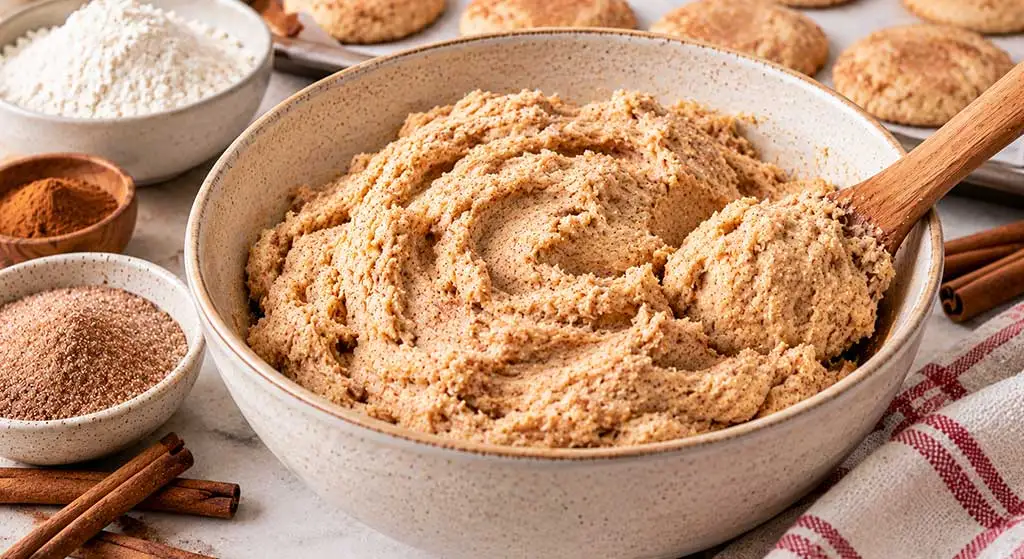
Leave out the chips. Whisk 1 teaspoon ground cinnamon and 1/4 teaspoon cream of tartar into the cooled flour. Then roll each scoop in 1 tablespoon sugar mixed with 1/2 teaspoon cinnamon. The result tastes warm, spiced, and gently tangy.
Ingredient Substitutions
A swap works best when you know each ingredient’s job. Flour builds structure, butter adds richness, and sugar supplies sweetness plus moisture. Since untreated flour can carry germs, the FDA’s guide to handling flour safely deserves a quick read before you pick a flour.
This dough never bakes, so cooking time stays the same. Texture is what shifts. Add any liquid one teaspoon at a time, and stop once the dough holds together when pinched.
| Ingredient | Substitute | Result |
|---|---|---|
| All-purpose flour (1 cup) | 1 cup (about 100 g) oat flour | Slightly denser and nuttier. No heat-treating needed. Add up to 1 extra tablespoon of milk. |
| All-purpose flour (1 cup) | 1 cup (96 g) almond flour | Softer and richer. No heat-treating needed. Skip the milk at first, then add 1 teaspoon at a time. |
| All-purpose flour (gluten-free) | Certified gluten-free oat flour | Slightly crumblier. Check the label for gluten-free certification. |
| Unsalted butter (dairy-free) | Plant-based butter sticks, not tub spread | Similar richness. Tub spreads make the dough too soft. |
| Milk (dairy-free) | Oat or almond milk | Nearly identical result. |
| Milk | Heavy cream | Richer and creamier. |
| Brown sugar and granulated sugar (low-sugar) | A 1:1 brown sugar sweetener blend | Less caramel flavor and a slightly grainier feel. |
| Semisweet chocolate chips (dairy-free) | Dairy-free chocolate chips | Same look and bite. Check the label. |
What to Serve With It

On a relaxed evening, spoon the cold dough into small bowls. Dunk graham crackers, pretzel sticks, or apple slices right in. A spoonable dessert also suits the end of a light meal, such as soup or salad.
Hosting a party? Roll chilled dough into small balls and coat them in melted chocolate for fast truffles. Or freeze scoops for 30 minutes and stir them into vanilla ice cream. A spoonful between two store-bought cookies works too. Browse Recipely for more easy dessert ideas.
Make Ahead and Storage
The fridge is the best home for leftover dough. Press it into an airtight container and refrigerate it within 2 hours of mixing. Toss anything that sat out longer than 2 hours.
Need portions ready on demand? Freeze scooped balls on a lined tray until firm, then move them into a freezer bag. Give each ball a few minutes on the counter so the texture softens.
| Method | How to Do It | How Long | Tip |
|---|---|---|---|
| Fridge | Airtight container | Up to 3 days | If stiff, let it stand 10 minutes before scooping |
| Freezer | Scoops in a freezer bag | Up to 2 months | Thaw 15 minutes, or eat frozen as cold bites |
| Countertop | Covered bowl | No more than 2 hours | Refrigerate or discard after 2 hours |
| Make-ahead flour | Heat-treat, cool, store airtight in the fridge | Up to 3 days | Label the container with the date |
| Dough too soft | Chill in the fridge | 15 to 30 minutes | Firms up for easier scooping |
FAQs
Does swapping flour change how to make edible cookie dough?
Yes, a little. Oat flour and almond flour skip the heat-treating step, but you may need more or less milk.
Can I skip the milk?
Yes, but the dough may turn crumbly. Add 1 to 2 teaspoons of water or cream until it holds together.
Can I bake this dough into cookies?
No. This dough has no eggs and no leavening, so it spreads into greasy puddles. Use a regular cookie recipe for baking.
Does salted butter work?
Yes. Skip the 1/4 teaspoon of salt, taste the dough, and add a pinch only if it needs it.
Can I make it dairy-free?
Yes. Use plant-based butter sticks, oat milk, and dairy-free chips. The dough stays softer, so chill it for 30 minutes.
Final Thoughts
You now know how to make edible cookie dough with one simple base and six easy twists. Begin with the base recipe, because every variation builds on it. Check the flour temperature, let it cool fully, and then start mixing.
Your next step is simple: heat-treat a batch of flour tonight and mix the base recipe. Next weekend, pick one variation to try. Put leftovers in the fridge within 2 hours, and finish them within 3 days.


