

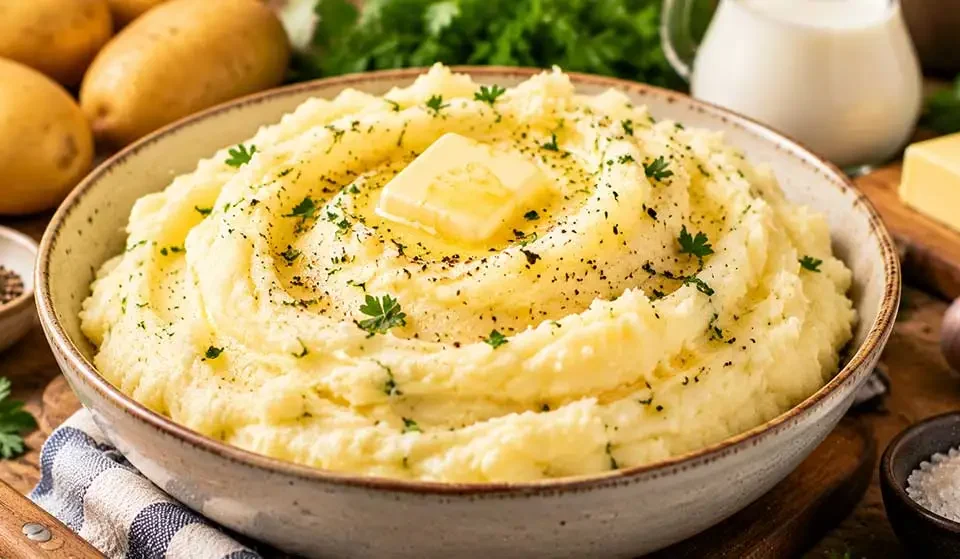

Nothing feels worse than a pot of mash that turns out gluey, lumpy, or bland. If you have been there, you are not alone. Even easy mashed potatoes can go wrong for three main reasons. First, the texture turns sticky and gummy. Second, hard lumps hide in the middle. Third, the taste comes out flat and watery. The good news is that every problem has a simple cause and a quick fix. This guide gives you exact measures, clear doneness cues, and safe temperatures. Up first, you will learn why the recipe goes wrong. Then you will cook along with a simple recipe card. Finally, you will fix mistakes fast.
Why This Recipe Goes Wrong
Potatoes pack tiny starch granules inside their cells. When heated, those cells swell and soften. However, if you mash too hard, the cells burst and release sticky starch. That is how Easy Mashed Potatoes turn gluey in seconds. Think of kneading bread dough: the more you work it, the stickier it gets. For that reason, a potato ricer or a potato masher works better than a mixer.
Heat and timing cause the other two problems. For example, cubes of mixed sizes cook unevenly, so small pieces turn mushy while big ones stay hard. As a result, the mash turns lumpy. Cold milk also chills the pot and makes the butter harder to blend in. On top of that, wet potatoes dilute the flavor and leave a watery mash. Fortunately, a gentle simmer and warm dairy solve most of this.
Recipe Card: Easy Mashed Potatoes
Wondering how to make creamy mashed potatoes that never turn out sticky? This card makes mashed potatoes with Yukon Gold potatoes for six people, and it only needs a few pantry basics. Better yet, the result is pure comfort food. You can find more sides on Recipely.
| Detail | Time or Amount |
|---|---|
| Prep time | 10 minutes |
| Cook time | 20 minutes |
| Total time | 30 minutes |
| Servings | 6 |
| Ingredient | Exact Quantity (US / Metric) | Why It Matters |
|---|---|---|
| Yukon Gold potatoes, peeled and cut into 1½-inch cubes | 3 lb / 1.36 kg | Medium starch gives a creamy, buttery mash |
| Kosher salt, for the cooking water | 1 tbsp / 15 ml | Seasons the potatoes from the inside |
| Unsalted butter, softened | ½ cup / 113 g | Adds richness and a silky feel |
| Whole milk, warmed | 1 cup / 240 ml | Blends in without cooling the mash |
| Kosher salt, to finish | ¾ tsp / 4 ml | Lifts the flavor after mashing |
| Black pepper, freshly ground | ¼ tsp / 1 ml | Adds a gentle bite |
If you only have fine table salt, use about half of each salt amount. For a fluffier mash, russet potatoes also work well in this recipe.
Step 1. Cut the Potatoes Evenly

Peel the Yukon Gold potatoes and cut them into 1½-inch (about 4 cm) cubes. Evenly cubed potatoes cook at the same pace, so every bite turns out the same. Meanwhile, drop the cubes into a bowl of cold water as you work. This keeps them from darkening before you cook.
Step 2. Start With Cold Salted Water

Move the cubes to a large pot and cover them with cold water by about 1 inch. Next, stir in 1 tablespoon of kosher salt. A cold water start lets the heat reach the center while the outside cooks. Set the pot over high heat and bring it to a boil, which is 212°F (100°C) at sea level.
Step 3. Simmer Until Fork-Tender
Once the water boils, lower the heat for a gentle simmer, about 200°F (93°C). Cook for 15 to 20 minutes. The potatoes are done when they turn fork-tender, meaning a fork slides into the biggest cube with no resistance. The edges should crumble a little.
Step 4. Warm the Milk and Butter

While the potatoes cook, add the milk and unsalted butter to a small saucepan over low heat. Warm them for about 3 minutes, until the butter melts and the milk steams at roughly 140°F to 160°F (60°C to 70°C). Do not let it boil. Warm milk and butter keep the mash hot and help it blend smoothly.
Step 5. Drain and Steam Dry
Scoop out ½ cup (120 ml) of the cooking water, then pour the potatoes into a colander. Let them drain for 1 minute. After that, return them to the dry pot over low heat. Stir gently for 1 to 2 minutes to steam dry them, until the surface looks dry and slightly chalky. Keep the reserved potato water nearby for loosening later. Pro tip: use the same pot so you skip washing a second dish.
Step 6. Mash Gently
Take the pot off the heat. Press the potatoes through a potato ricer or mash them with a potato masher until no lumps remain. Then pour in the warm milk and butter in three parts. Fold with a spatula after each pour for a silky finish. Skip the blender and the food processor.
Step 7. Season and Serve Hot

Add ¾ teaspoon of kosher salt and ¼ teaspoon of pepper. Taste, then add more a pinch at a time. Serve right away while the mash is steaming hot. A small pat of unsalted butter on top looks great and melts into every spoonful.
Troubleshooting Guide
Even careful cooks hit snags, and Easy Mashed Potatoes are no exception, even for a holiday side dish. Use the table below to spot your problem fast. Then, if you want more sides for the table, browse Recipely for ideas.
| Problem | Likely Cause | Quick Fix |
|---|---|---|
| Gluey or gummy | Too much mixing, or a blender | Use a ricer or masher and fold gently |
| Lumpy | Uneven cubes or hard centers | Cut evenly and cook until fork-tender |
| Watery | Wet potatoes after draining | Steam dry in the hot pot for 1 to 2 minutes |
| Bland | Unsalted cooking water | Salt the water, then season at the end |
| Stiff or dry | Too little milk | Stir in warm milk or reserved potato water, 1 tablespoon at a time |
| Greasy or split | Butter too hot or added all at once | Add warm, soft butter in stages |
| Gray or dark | Peeled cubes left in open air | Keep cubes in cold water until cooking |
| Thick after standing | Mash cooled and tightened up | Loosen with warm milk over low heat |
Why Are My Mashed Potatoes Gluey?
Sticky mash comes from burst starch cells. A blender, a food processor, or a long session with a hand mixer usually causes it. So how do you fix gluey mashed potatoes? Unfortunately, you cannot undo the starch. However, you can rescue the batch by shaping the mash into patties and pan-frying them until hot all the way through. Next time, reach for a potato ricer for a fluffy result.
How Do I Fix Lumpy Mash?
Lumps almost always mean the cubes cooked unevenly. Large pieces stay firm while small ones turn soft. First, scoop out any hard bits. Then simmer them in water for 5 more minutes and mash them back in. To prevent this, aim for evenly cubed pieces, all about 1½ inches wide. Also test the biggest cube, not the smallest, for fork-tender softness before you drain.
What If My Mashed Potatoes Taste Bland or Watery?

Flat flavor starts in the pot. Salt added only at the end sits on the surface, so season the cooking water with kosher salt too. Watery mash comes from wet potatoes. If yours turns out loose, return the pot to low heat and stir for 2 to 3 minutes. The extra steam carries off moisture, which helps you steam dry the batch again. Finish with a pinch of salt and a small knob of butter.
Cook’s Note
Many cooks find that cube size drives almost everything in this recipe. Cubes cut to 1½ inches (about 4 cm) usually turn fork-tender in 15 to 20 minutes. However, a 2-inch chunk can need 5 or more extra minutes. A common mistake is draining the pot at the 15-minute mark without checking the largest piece. Test that one first.
Mistakes to Avoid
Small habits can ruin Easy Mashed Potatoes before you even start mashing. Watch for these four.
Starting in boiling water. Dropping cubes into a rolling boil cooks the outside much faster than the center. As a result, you get mushy edges and a firm core. Instead, choose a cold water start.
Pouring in cold milk. Cold dairy chills the potatoes and makes the butter harder to blend in. Warm it first, and use warm milk and butter for a smoother, silky finish.
Reaching for a blender. Fast blades shred the starch cells and turn mash into paste. A potato ricer or potato masher gives a fluffier, creamier texture.
Skipping the salt in the water. Potatoes absorb salt as they cook. Without it, seasoning at the end rarely reaches the center. Salt the water so every bite tastes right.
Storage and Reheating
Cool leftovers quickly and follow the leftovers guidance from the USDA Food Safety and Inspection Service by refrigerating mash within 2 hours of cooking. If the room is hotter than 90°F, cut that to 1 hour. Use the table below to choose a method, from the fridge to a double boiler.
| Method | How to Do It | Time Limit | Notes |
|---|---|---|---|
| Refrigerate | Spoon into shallow airtight containers | 3 to 4 days | Shallow containers chill faster |
| Freeze | Cool fully, pack flat in freezer bags, press out air | Up to 2 months for best quality | Thaw overnight in the fridge |
| Reheat on the stove | Low heat with 1 to 2 tbsp warm milk, stirring often | 5 to 8 minutes | Heat to 165°F (74°C) |
| Reheat in the microwave | Cover, heat in 60 to 90 second bursts, stir between | 3 to 5 minutes | Heat to 165°F (74°C) |
| Keep warm for serving | Covered double boiler over simmering water | Up to 2 hours | Keep at 140°F (60°C) or hotter |
Planning ahead? Make-ahead mashed potatoes work well when you cool them fast and store them sealed. To reheat mashed potatoes, stir in a splash of warm milk so they turn creamy again.
FAQs
Can a blender ruin my mash?
Yes, because fast blades burst the starch cells and leave a gluey paste. Use a potato ricer or masher instead.
How do I fix watery mashed potatoes?
Return the pot to low heat and stir for 2 to 3 minutes. The extra steam carries off moisture and helps you steam dry the potatoes.
Can I fix bland mash after mashing?
Yes, add kosher salt a pinch at a time and stir in a little butter. Taste after each addition.
Why do I still have lumps in my mash?
Uneven cubes or undercooked centers cause lumps. Cut evenly cubed pieces and test the biggest one for fork-tender softness before draining.
Can I make mashed potatoes ahead without drying them out?
Yes, cool them fast and store them sealed. Then reheat gently with a splash of warm milk.
Final Thoughts
Great Easy Mashed Potatoes come down to even cubes, a cold water start, warm dairy, and a gentle hand. Fix those four things and the gluey, lumpy, and watery problems fade away. This simple dish also fits any holiday side dish menu, from weeknight dinners to Thanksgiving.
Your next step is simple. Buy 3 pounds of Yukon Gold potatoes this week and cut them to the same size. Set a 15-minute timer, and check the largest cube with a fork when it rings.


[…] another take on a potato side, this creamy mashed potato recipe offers a different texture. You can also adapt the baked center with herbs, spices, or a spoonful […]