

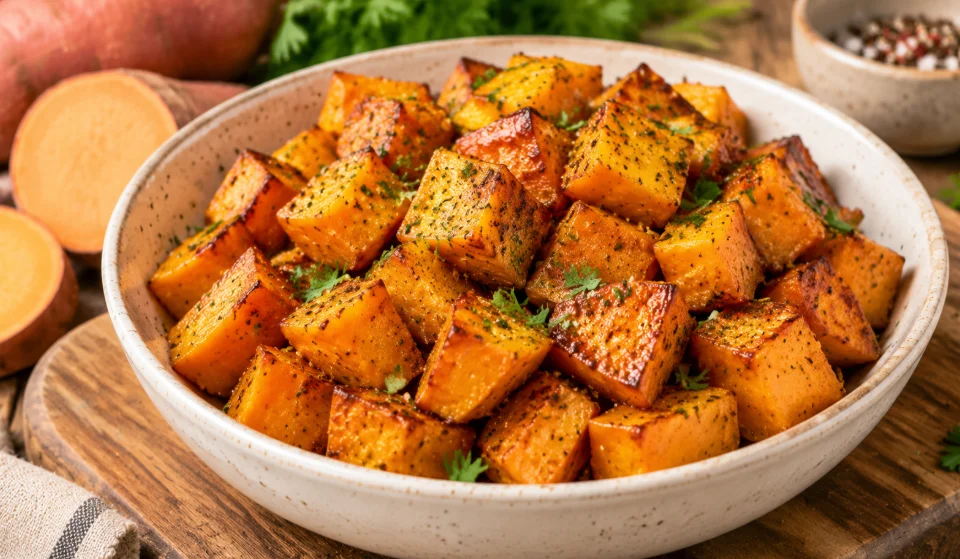

sweet potato recipe success starts with firm, similar-size sweet potatoes baked until their centers are soft. This easy oven method gives home cooks in the USA a hands-off way to prepare a comforting side or a flexible meal base.

Whole baked sweet potatoes suit easy weeknight cooking because you can prepare them with little effort. Their soft texture pairs with simple side dishes or a topping that makes them more filling. You get a warm, tender center without a complicated process.
A few simple ingredients let the potato’s natural sweetness and savory toppings work together in this sweet potato recipe.
Key Takeaways
- Choose firm sweet potatoes that are close in size.
- Wash and dry each potato before baking.
- Use a fork to check for a tender center.
- Serve each potato plain or add a savory topping.
- Keep fresh sweet potatoes in a cool, dry place.
Sweet Potato Recipe Ingredients and Prep
For four servings, gather four medium sweet potatoes, one tablespoon of olive oil, and half a teaspoon of kosher salt. This simple sweet potato recipe also calls for optional butter at the table. Choose firm sweet potatoes that are free of decay and similar in size for more uniform cooking.
Sweet potatoes come in several colors: orange skin with orange flesh, red skin with orange flesh, yellow skin with white flesh, purple skin with white flesh, and purple skin with purple flesh. Their color varies but the same basic prep works for each kind.
| Ingredient | Quantity | Use |
|---|---|---|
| Medium sweet potatoes | 4 | Main ingredient |
| Olive oil | 1 tablespoon | Coat the skins |
| Kosher salt | 1/2 teaspoon | Season the skins |
| Butter for serving | 2 tablespoons, optional | Add at the table |
To prepare the sweet potato, rinse each one under running water and scrub away dirt. Dry them well with a clean towel. Prick each potato several times with a fork so steam can escape as it cooks.
Do not refrigerate fresh sweet potatoes. Cold storage can cause a hard center and an unpleasant taste.
Raw sweet potatoes can keep for up to two weeks when stored properly. Follow cool, dry storage guidance and keep them in a well-ventilated place away from heat. For more detail, see Mississippi State Extension’s storage advice. These prep steps also help you learn how to cook sweet potatoes without losing their natural flavor. Store fresh sweet potatoes in a cool, dry, well-ventilated place away from heat.
How Long to Bake Sweet Potatoes for a Sweet Potato Recipe
Bake whole sweet potatoes at 400°F for 40 to 50 minutes, until a fork slides into the center easily. The direct answer to how long to bake sweet potatoes is usually 40 to 50 minutes. The oven should be at 400°F, and the potatoes are ready when they feel tender at the center.

Follow these short steps for a tender baked sweet potato. The size of each potato affects where it falls within the time range so start checking the largest one near the end.
- Heat the oven to 400°F.
- Arrange the prepared potatoes on a baking sheet with space between them.
- Bake until tender. Pierce the largest potato with a fork and check whether the center gives easily.
- Let the potatoes rest briefly before opening them. Split each one down the top when you are ready to serve.
In a separate timing check, how long to bake sweet potatoes is 40 to 50 minutes at 400°F. Smaller potatoes may finish earlier than larger ones. A reliable fork test matters more than a clock alone, especially when your potatoes are not exactly the same size.
Other methods work when you do not want to use the oven. Microwave one whole sweet potato on high for 4 to 6 minutes, turning it halfway through. Steam whole, unpeeled sweet potatoes for 40 to 50 minutes, or steam peeled 1-inch cubes for 30 minutes. Boil whole sweet potatoes for about 35 to 40 minutes.
Roasted sweet potatoes cut into pieces cook differently from whole ones so use the whole-potato timing only for this method. For more ideas on how to roast sweet potatoes in the oven, try these easy sweet potato recipes. An air fryer sweet potato also uses a different cooking setup so check tenderness instead of relying on this oven range. Check the largest potato first because similar-size potatoes tend to finish more evenly.
Sweet Potato Recipe Method and Serving Ideas
A baked sweet potato can work as a side or a meal base, depending on the toppings you choose. Butter, chives, or Greek yogurt make easy finishing touches. A savory bean topping adds a hearty option when you want the potato to anchor a meal.

A healthy sweet potato recipe can fit into a balanced meal with non-starchy vegetables and lean protein. Use the American Diabetes Association’s Diabetes Plate as a practical guide for a 9-inch plate:
Fill half of a 9-inch plate with non-starchy vegetables, one-quarter with lean protein, and one-quarter with quality carbohydrates such as starchy vegetables.
This approach leaves room for a baked sweet potato while giving the meal more variety. Choose leafy greens, broccoli, or another non-starchy vegetable for the larger portion. Add a lean protein such as chicken, fish, or beans to round out the plate.
There are plenty of other ways to use sweet potatoes. Sweet potato casserole works for a shared meal, while mashed sweet potatoes make a soft side. Sweet potato fries and sweet potato wedges offer crisp-edged choices. Candied sweet potatoes bring a sweeter flavor, and sweet potato soup turns them into a warm bowl.
For another take on a potato side, this creamy mashed potato recipe offers a different texture. You can also adapt the baked center with herbs, spices, or a spoonful of beans. Keep the topping simple if you want the potato’s own sweetness to stay noticeable.
Cooked, sliced, or mashed sweet potatoes can be frozen for up to one year. Add a small amount of lemon juice then pack them in an airtight container or heavy-duty freezer bag. This works well when you have extra portions ready for another meal.
For safe handling of cooked leftovers, follow the USDA Food Safety and Inspection Service’s leftovers and food safety guidance. Keep the serving plan flexible: toppings can shift a simple side into a more filling plate without changing the basic preparation. Freeze cooked sweet potatoes with a little lemon juice in an airtight container or a heavy-duty freezer bag.
Conclusion
A soft baked sweet potato is an easy starting point for a satisfying meal. The center turns tender while the skin holds its shape, so you can serve it whole or open it at the table. That simple format works on a busy evening when you want a warm side without extra fuss.
Keep the toppings suited to the meal. A small amount of butter or a spoonful of Greek yogurt gives the potato a creamy finish. Beans or herbs make it feel more substantial. Pair it with vegetables and protein when you want a fuller plate.
Healthy sweet potato recipes do not need a long ingredient list. Choose a topping you like and let the baked potato do the rest. Pick a topping you enjoy and make this sweet potato recipe for your next meal.
FAQ
Can you freeze cooked sweet potatoes?
Yes, cooked sweet potatoes can be frozen for up to one year. Add a small amount of lemon juice to sliced or mashed portions then pack them in an airtight container or a heavy-duty freezer bag. Seal the package well before freezing. This method works for whole cooked pieces too, though slicing or mashing can make portions easier to use later.
What are the different types of sweet potatoes?
Five common types have different skin and flesh colors: orange skin with orange flesh, red skin with orange flesh, yellow skin with white flesh, purple skin with white flesh, and purple skin with purple flesh. The color tells you which variety you have, but these types can all be prepared as whole baked sweet potatoes. Choose firm ones with no signs of decay.
Is sweet potato good for insulin resistance?
A 2026 review of 10 animal studies involving 428 animals reported lower fasting plasma glucose after sweet potato administration. The findings came from animal models, so they do not establish that sweet potatoes improve insulin resistance in people. Sweet potatoes are a starchy vegetable and can fit into a balanced meal, but the animal results are not proof of a human health effect.
What’s the downside of eating sweet potatoes?
Sweet potatoes are starchy vegetables, so portion balance can matter when planning a meal. The American Diabetes Association’s Diabetes Plate offers a practical guide: half of a 9-inch plate for non-starchy vegetables, one-quarter for lean protein, and one-quarter for quality carbohydrates such as starchy vegetables. This helps you include a sweet potato alongside other foods rather than treating it as the whole meal.


